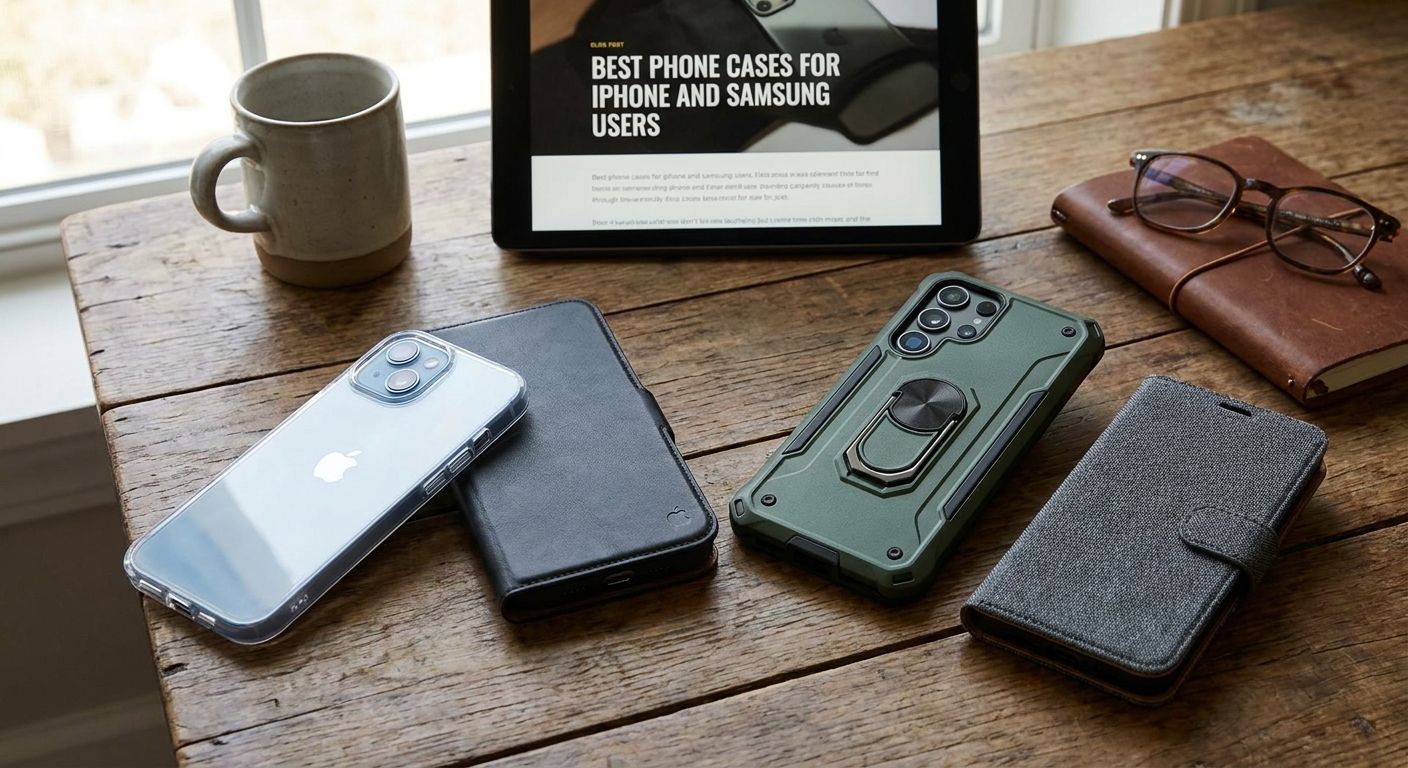
Picking the best phone cases for iPhone and Samsung devices in 2026 comes down to five real categories, not fifty near-identical listings. This guide ranks each category by protection, bulk, and daily usability so you buy once and stop replacing a cracked case every three months.
- Rugged cases built to MIL-STD-810G's 4-foot drop standard are the safest pick for daily carry in 2026.
- Clear and slim cases are the best phone cases for anyone who never drops their phone but hates bulk.
- MagSafe and Qi2-certified magnetic cases now hit 15W wireless charging and are worth the extra cost.
- Wallet cases save a step at checkout but add the most thickness of any category tested here.
- iPhone and Samsung buyers should match the exact model number before anything else — port and button cutouts vary yearly.
Why this matters
A cracked screen or a dead charging port costs more than any case on the market. iPhone and Galaxy owners in 2026 are holding onto phones for three to four years instead of upgrading every cycle, which means the case you buy now needs to survive that whole stretch, not just the first six months.
Browsing iZumer's accessories lineup is a fast way to see the category range side by side before you commit to one type. The rest of this guide breaks down which category actually earns its price.
How this list was ranked
Each category below is scored on three factors: protection level against drops and water, added bulk in the hand and pocket, and whether it interferes with wireless charging or MagSafe alignment. Rugged cases are judged against MIL-STD-810G's published 4-foot drop procedure, the same benchmark manufacturers cite when they claim "military-grade" protection. Waterproof claims are checked against the IP68 standard, where the second digit means continuous submersion resistance beyond one meter. Categories that fail either standard outright, or that trade real protection for looks, get marked down regardless of price.
The ranked list
1. Rugged case — the daily-carry workhorse
Rugged cases built around MIL-STD-810G's 4-foot drop standard are the closest thing to insurance you can buy for an iPhone or Galaxy phone. The raised bezel around the camera and screen is the detail that actually matters — it's what keeps glass off the ground on a face-down drop. These cases add real bulk, usually enough to change how the phone sits in a cup holder or tight pocket, but for anyone who works outdoors, commutes by bike, or has dropped a phone twice in 2026 already, that tradeoff is worth it. Verdict: Buy if you've cracked a screen in the last two years.
2. Clear/slim case — the low-profile pick
A clear TPU or polycarbonate case keeps the phone's original design visible while adding a thin buffer against scuffs and light drops. It won't survive a 4-foot fall onto concrete the way a rugged case will, and yellowing over time is a known issue with cheap TPU blends. For someone who treats their phone carefully and just wants scratch protection on a new iPhone or Galaxy model, this is the right call. Verdict: Buy for careful users, Skip if you've broken a screen before.
3. Wallet case — the one-less-thing-to-carry option
A snap-on or folio wallet case holds a couple of cards and sometimes cash, which means one less item to pat your pockets for on the way out the door. The tradeoff is thickness: these are consistently the bulkiest option on this list, and the added weight on one side can make the phone feel front-heavy. They also block most wireless charging pads unless the case is specifically built with a cutout or Qi2 pass-through. Verdict: Consider if you already carry a minimal wallet, Skip if you use wireless charging daily.
4. MagSafe/magnetic case — the wireless-charging upgrade
Qi2-certified magnetic cases now support up to 15W wireless charging in 2026, up from the inconsistent 7.5W many older MagSafe-adjacent cases delivered. The magnet array also keeps the phone locked to car mounts and charging stands without the wiggle that plain cases have. Samsung's magnetic ecosystem has caught up enough that this is no longer an iPhone-only advantage. The catch is price — magnetic cases run higher than plain silicone or clear options because of the embedded magnet ring. Verdict: Buy if you use wireless charging or magnetic mounts regularly.
5. Silicone case — the everyday grip pick
Silicone cases give the best in-hand grip of any category here, which matters more than people expect once a phone gets a screen protector making it slicker. They're thinner than rugged cases and offer moderate drop protection, but silicone attracts lint and shows wear faster than polycarbonate. For someone who wants better grip without rugged-case bulk, this sits in the middle of the pack. Verdict: Buy for grip-focused users, Consider as a secondary case for gym or outdoor use.
Comparison table
| Case Type | Best For | Drop Protection | Added Bulk | Wireless Charging | Verdict |
|---|---|---|---|---|---|
| Rugged | High-risk daily use | High (MIL-STD-810G rated) | High | Usually compatible | Buy |
| Clear/Slim | Careful users | Low-moderate | Minimal | Compatible | Buy |
| Wallet | Minimal-carry users | Moderate | Highest | Often blocked | Consider |
| MagSafe/Magnetic | Wireless charging users | Moderate | Low-moderate | Optimized, up to 15W | Buy |
| Silicone | Grip-focused users | Moderate | Low | Compatible | Buy |
Compare phone cases by model
See iPhone and Samsung case options matched to your exact model.
Where to buy
- Match the exact model number, not just the phone family. iPhone and Galaxy port placements, camera bump sizes, and button positions shift between yearly models, and a case built for last year's release rarely fits a 2026 model cleanly.
- Check the listing for Qi2 or MagSafe certification if wireless charging matters to you. A case that's simply "magnetic" without certification may not hit the full 15W charging speed.
- Buy rugged cases from listings that reference MIL-STD-810G by name. Vague "military-grade" claims without the standard cited are a red flag for untested marketing language.
FAQ
What are the best phone cases for iPhone and Samsung in 2026?
Rugged cases built to the MIL-STD-810G 4-foot drop standard are the best overall pick for daily protection in 2026. Clear or silicone cases work better for users who rarely drop their phone and want less bulk.
Is a MagSafe case better than a regular case?
A MagSafe or Qi2-certified case is better if you use wireless charging or magnetic mounts, since it supports up to 15W charging and locks securely to compatible accessories. A regular case is fine if you always charge with a cable.
How much does a good phone case cost?
Pricing varies by category and material, with rugged and magnetic cases typically costing more than basic clear or silicone options due to added materials like embedded magnets or reinforced bezels. Check current listings for exact pricing.
Do wallet cases block wireless charging?
Most wallet cases block wireless charging because the card slot sits directly over the charging coil. Some newer designs add a cutout or Qi2 pass-through specifically to avoid this problem.
Are clear cases durable enough for daily use?
Clear cases handle scuffs and light drops well but are not rated for the same protection level as rugged cases tested to MIL-STD-810G. They also tend to yellow over time with UV exposure.
What does IP68 mean on a phone case?
IP68 means the case resists continuous submersion in water beyond one meter, based on the IEC 60529 rating scale. It does not guarantee protection against drops or impacts.
Can I use the same case across iPhone and Samsung model years?
No, case fit is specific to the exact model because camera bumps, button placement, and port location change between releases. Always match the case listing to your specific model number.
Is silicone or polycarbonate better for grip?
Silicone offers noticeably better grip than polycarbonate, which matters most once a screen protector makes the glass slicker. Polycarbonate holds up better against lint and visible wear over time.
One last thing
The detail most buyers skip: check whether a "military-grade" case actually cites MIL-STD-810G by name. If the listing just says "military-grade" without naming the standard or the drop height it was tested to, treat that claim as marketing language, not a spec. The best phone cases in 2026 name their testing standard directly — that's the fastest way to separate a real rugged case from a padded label.